What is The Great Disconnect?

In this book the author examines more than 1,400 years of Muslim history to illuminate both the ideals of Islam and the historical journey of Muslims. He shows how the early Muslim community, guided by the Prophet Muhammad SAWS, rose to great heights before declining to its present condition. Through careful research into Muslim political, theological, and philosophical history, he identifies several major mistakes that contributed to this decline. The unique feature of this work is that it is written from the perspective of an ordinary Muslim who put in the time to research and reference all elements of the content in the book. Hence it is instantly relatable to many other Muslims who share the sentiments but may not have had the opportunity to put together a book. The purpose is not to assign blame, but to help begin the process of correction (Tashih).
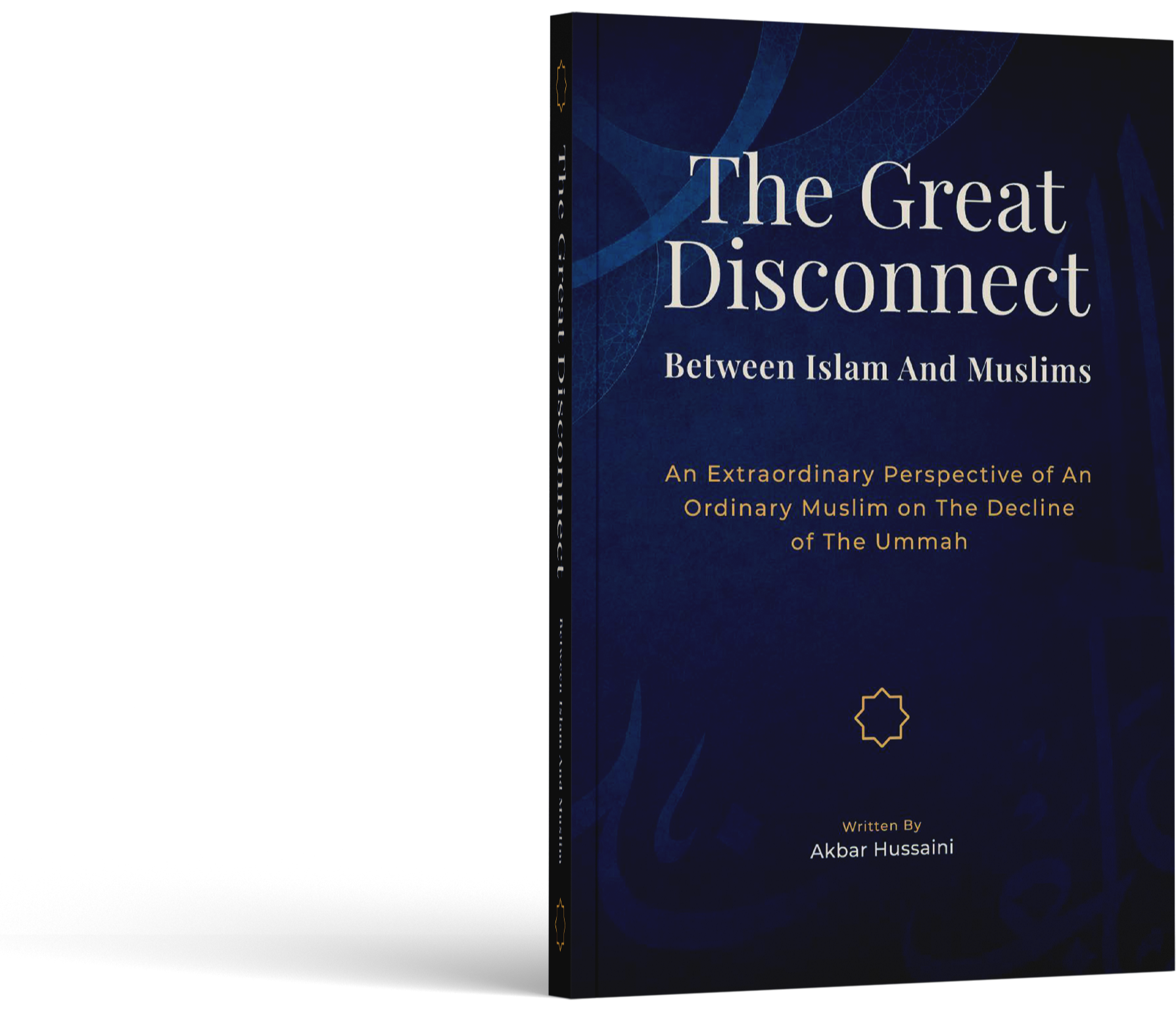
Book cover titled 'The Great Disconnect: Between Islam and Muslims' by Akbar Hussaini with a dark blue background and geometric design elements.

To learn more about the Author (Akbar Hussaini)
Please visit the author website by clicking below
A woman in a black headscarf and dress walking through a war-torn area with three children, holding a child's hand. The landscape around them is filled with debris and destroyed buildings.

Why Now?

Why Tashih Is The Start For Fixing What is Wrong

SEE BELOW

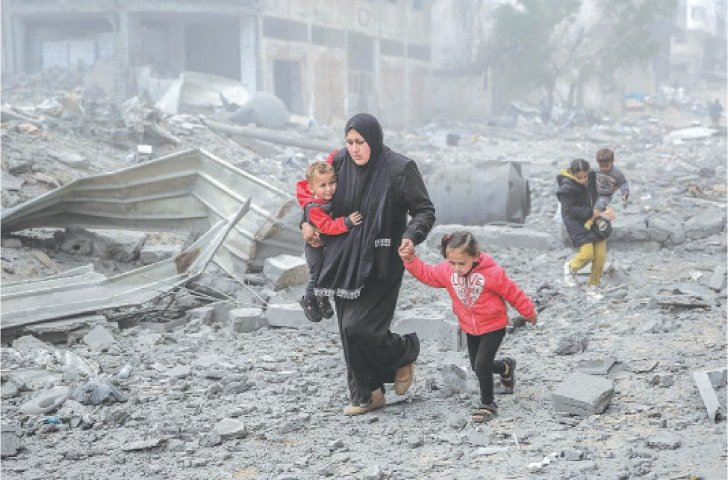
  • History is replete with incidents of massacres and genocides of innocent people. Reading about the reports of such incidents we often get angry and frustrated at how the people of the time allowed and perhaps enabled these horrific stains of humanity to occur. We may have even found ourselves in a state of self-righteous indignation saying we would never allow this to happen in today’s civilized society. That is until Gaza happened, in our lifetimes in front of our own eyes as we wring our hands or choose to ignore it completely.

    While the people of Gaza die by the hundreds everyday at the hands of a tyrannical sub-human enemy.  Their appetite for evil not content with dropping hundreds of thousands of bombs on 2.2 million Palestinians corralled into a small corner of Gaza, they even cut off food supplies to starve those who survived the bombs and bullets. We witness on a daily basis emaciated bodies rushing to food distribution centers while being fired upon. Thousands rush in to grab whatever food they can to feed their families knowing full well that the next step could be their last step and they could be struck by the indiscriminate firing. Withing minutes the meagre supply of food disappears, and the scene transforms to a few desperate laggards scraping the ground for fallen bits of noodles and rice to fill their pockets. Then they dash out to the narrow passage that is the only way out of the supply center where they see bullet ridden bodies strewn on the ground, many of who are their friends and family who walked with them for hours to the food distribution center.  

  • We see this on TV, we see this on our social media and as an Ummah we see it in the eyes of each other, the burden of helplessness and inadequacy as individuals and as a collective. What we do not see so clearly is the impotence of the more than 50 Muslim states, nor the ineptitude of over 2 billion Muslims living in the world today. We do not see the millions of Muslims youth in the Muslim majority countries uneducated and under employed languishing on the sides of the streets while the world marches right past them. We may or may not notice the religious leadership offering rigid interpretations and outward ritual worship as their ticket out of this situation. And we certainly do not see the various factors that contributed to this decline in the condition of the Ummah from the zenith of knowledge and power.  

    It is the power of the word of Allah SWT preserved in the Quran and the exemplary life of the prophet that we still have a kernel of that identity as Muslims. But it won’t be long before even that is extinguished from our collective psyche. With Islam gone Muslims will be relegated to the forgotten people of history. It is unlikely that Allah SWT would allow this to happen to the Ummah of His last messenger Muhammad SAWS. However, we as Muslims have done all we can to head barreling towards oblivion. Unless we understand the actual meaning and greatness of this identity as Muslims, we will never lead ourselves towards the realization of Islam and its ideals. Soon the last sparks of pride in this Muslim identity will disappear and we will become a cold carcass of what the Ummah was meant to be.

  • Let us not wait for that spark of Muslim identity to be extinguished, for which many Muslims including the Palestinians of our times have laid down their lives with such grace that confounds the rest of the world. Let us examine in earnest the root causes and start making corrections to our Deen beginning today. Start with ourselves and our families the process of self-correction / Tashih so as an Ummah we can start to find our way back to the Siratul Mustaqeem. The straight path where Allah SWTs guidance and blessings are promised in Surah Fatihah that we recite in every unit of the five daily prayers. 

    We have taken the first step with Bismillah to start this platform and defined the guidelines. We also have a clear idea of the next steps in this process. However we have the humility to know that exactly how this plays out depends upon our effort, Allah’s Will and your participation. We know that we may not have the best ideas and it could very well come from you. So please join us and share your ideas at this foundational level to see your vision come to life. Together we will start making the difference to lift the Ummah of Prophet SAWS out of this state of decline and back into being the torchbearers for humanity.

The book compels Muslims to start with critical self-examination then leads them through the analysis of factors so they not only identify them but also aim to correct themselves in the light of Quran and Sunnah.

Goals and Objectives

Realistic analysis of how close the early Muslims got to living these ideals

Start with the ideals, goals and intentions of Deen of Islam for the humanity

Review how human folly, ego and malicious intent crept in to start corruption

Analyze the major historical mistakes the Ummah made to decline from the zenith

Apply the uncorruptible word of God in Quran and the Sunnah to find our way back

See why the contemporary situation of the world may be ideal to apply true Islam

Quotes From The Book

The author examines more than 1,400 years of Muslim history to illuminate both the ideals of Islam and the historical journey of Muslims. He shows how the early Muslim community, guided by the Prophet Muhammad SAWS, rose to great heights before declining to its present condition. Through careful research into Muslim political, theological, and philosophical history, he identifies several major mistakes that contributed to this decline. His purpose is not to assign blame, but to help begin the process of correction (Tashih). 
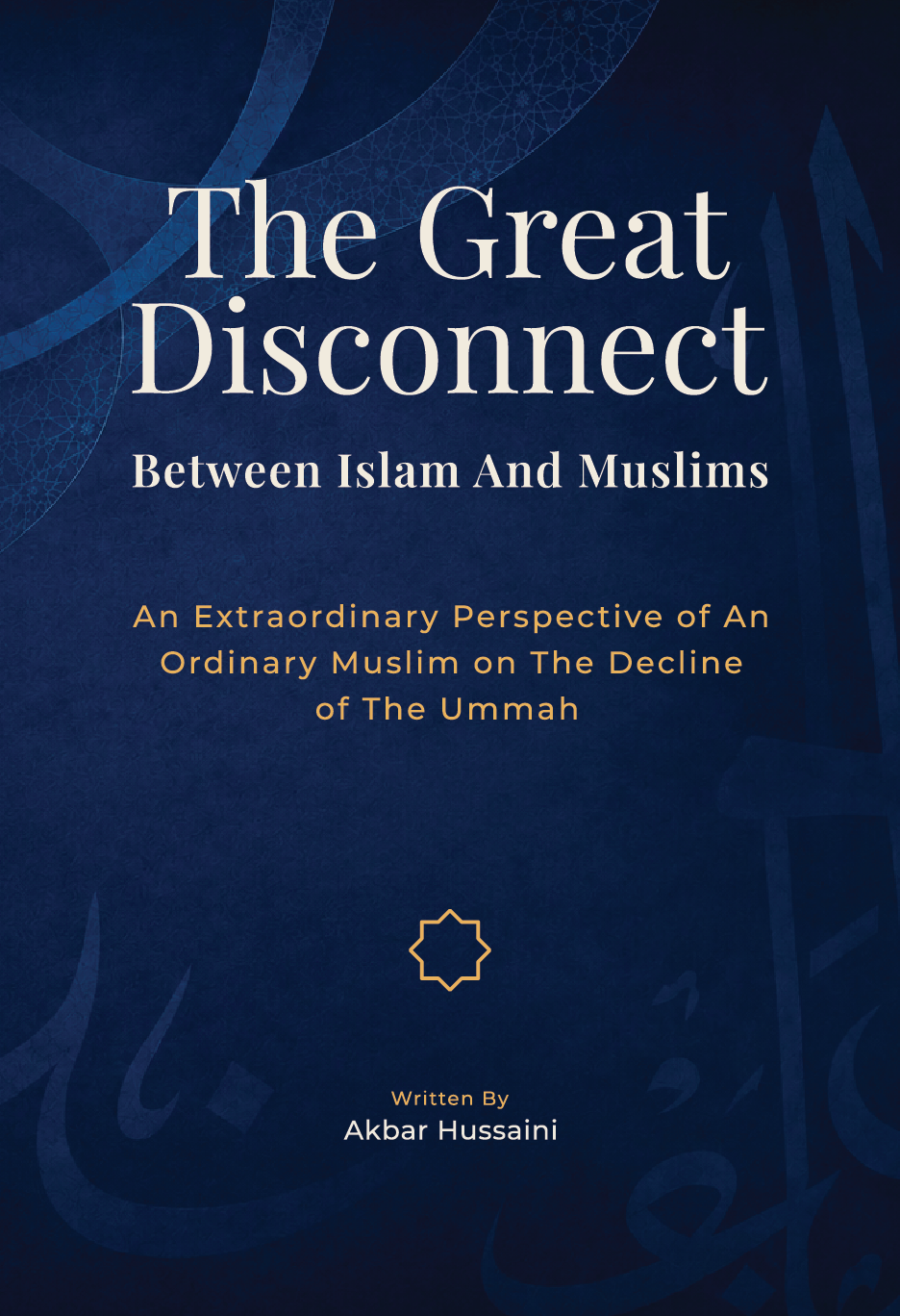
Book cover titled 'The Great Disconnect: Between Islam and Muslims' by Akbar Hussaini, featuring a blue background with Islamic geometric patterns.

Read Some Quotes from The Great Disconnect Below
  • Blue textured background with abstract patterns and light swirl designs.

    “Whether or not we consider ourselves one Ummah, our enemies do see us as one homogeneous entity and an easy target to exploit and persecute”.

    - Chapter 1

  • Digital abstract blue background with geometric and swirling patterns.

    “If Islam was all about individual salvation from the hellfire in the hereafter, as some other religions claim to be, then it would also have encouraged the life of a hermit in a remote corner. However, Islam aims at making the world a better place by applying the divine principles in our lives and our society”.

    - Chapter 2

  • A dark blue textured background with abstract circular and swirling patterns.

    “To believe in complete helplessness and throw our hands up in despair at everything and say if Allah (SWT) wills it will happen, is nothing short of abject dereliction of our duty as the vicegerent of Allah (SWT) in this world. And we will indeed be called to account for making that choice”.

    - Chapter 4

  • A dark blue abstract background with light blue intricate patterns and swirls.

    “While the West was coming out of this chokehold of the priests as intermediaries (perhaps learning from Islam), the Muslims were voluntarily wearing the slave collar of elitism, intermediation, and intercession”.

    - Chapter 7

  • A dark blue textured background with faint abstract swirl patterns and geometric shapes.

    “Hence, these newly educated doctors and engineers found themselves in the middle of a dichotomy, where on one side was this apparent progress, and on the other side, at home, was a religion that was no more than a collection of rituals without any logical explanation. The benefits from worldly knowledge and degrees were tangible, while the religious benefits were based entirely on faith in the reward in the hereafter. They felt like they were connected to two huge blocks of ice drifting apart, stretching their grip to its limit. They were forced to let go of one or the other. Usually, they let go of the religious block and became completely westernized, often changing their names as well”.

    - Chapter 8

Reserve a signed copy

A hand holding a lit match over an open notepad in warm lighting.